
For Tesla tint in Penang, we do not start by choosing one darkness level for the whole car. We match the windscreen, frameless side windows, rear glass and glass roof separately because each area has a different job involving heat, visibility, privacy, comfort and legal VLT requirements.
A Model 3 or Model Y has a very different glass layout from a conventional sedan. At FOC, our aim is to understand how you park, when you drive, who normally sits in the vehicle and which glass area is causing discomfort before we discuss a film series. That creates a more useful Tesla tint solution than simply choosing the darkest package available.
A Tesla can feel refined and comfortable while moving, yet the experience can change quickly after the vehicle has been parked under Penang's afternoon sun. The windscreen, panoramic roof and large rear glass create different areas of solar exposure, so the heat you feel may come from more than one direction.
You may have just collected your Model 3 or Model Y and already be asking: Does the glass roof really need additional tint? Can I improve windscreen heat control without making night driving uncomfortable? Will the frameless window edges still look clean after installation?
Those are better questions than simply asking, “What percentage should I tint my Tesla?”
We prefer to solve the glass areas that create the biggest real-world problem first. A Tesla owner who drives at night every day may need a different front-glass balance from someone whose Model Y spends eight hours outdoors while children regularly sit in the rear.
We treat a Tesla as several glass zones rather than one tint package. The correct solution for the roof may be completely different from the correct solution for the windscreen or front doors.
The windscreen affects solar exposure, dashboard heat, glare and forward visibility. We therefore prioritise legal VLT, optical clarity and comfortable driving rather than using darkness as the main measure of performance.
For owners who regularly drive at night or in heavy rain, this balance becomes even more important.
The roof mainly affects overhead radiant heat, visible sunlight and rear-passenger comfort. Some owners want to preserve the open-glass feeling, while others prefer stronger shading during long periods of outdoor parking.
We do not assume every Tesla roof should automatically receive the darkest available film.
Rear glazing affects rear-seat solar exposure, privacy and outward visibility. Large curved glass also makes installation quality especially noticeable.
Our objective is to create a clean visual result while keeping the driver's practical rearward visibility in mind.
Tesla door glass automatically moves slightly as the door opens and closes. That makes edge finishing, film positioning, curing guidance and post-installation window use especially important.
A neat Tesla installation should look deliberate around the glass edge rather than like a generic film job adapted at the last minute.
Film darkness is only one part of the decision. We also consider the vehicle's existing glass, final VLT, heat-management performance, visibility, film construction, installation area and how the vehicle is actually used.
| Tesla Glass Area | What the Owner Usually Wants to Solve | Our Decision Direction |
|---|---|---|
| Front windscreen | Arm exposure, dashboard heat and forward glare | Legal VLT, optical clarity and heat management first |
| Front frameless doors | Solar exposure, privacy and night-driving visibility | Balance final VLT with practical day-and-night use |
| Rear doors | Children, family comfort and privacy | Greater emphasis can be placed on rear-seat comfort where suitable |
| Glass roof | Overhead heat, rear-passenger sunlight and natural light | Compare roof film, removable sunshade or a combined strategy |
| Rear / tailgate glass | Parking exposure, rear-seat heat and privacy | Balance large-glass heat management with rearward visibility |
For private vehicles, current Malaysian rules require at least 70% VLT for the front windscreen and at least 50% VLT for the front side windows beside the driver row. Glazing behind the driver row does not have the same minimum VLT requirement under the current private-vehicle rule.
The important detail is that final VLT depends on the original Tesla glass together with the installed film. We therefore do not assume that a film marketed with a certain VLT will produce exactly the same finished reading on every Tesla.
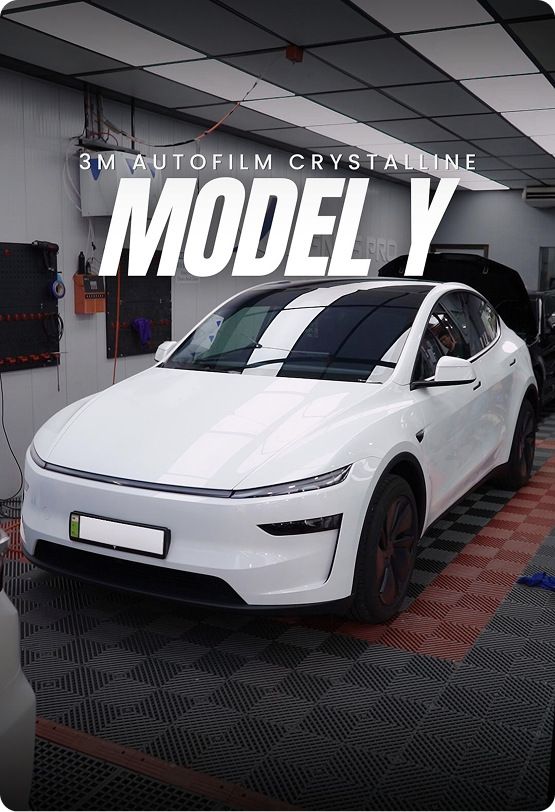
Roof tint is not automatically the only answer. We first consider how often the Tesla is parked outdoors, whether rear passengers are sensitive to overhead sunlight and how much you value the panoramic-glass feeling.
| Option | Who It May Suit | Main Advantage | What We Confirm First |
|---|---|---|---|
| Roof tint | Owners who frequently park outdoors and want a permanent solution | Maintains the open roof appearance without daily fitting and removal | Model year, roof-glass specification, compatible film and installation requirements |
| Removable sunshade | Owners who mainly need extra shading on selected journeys or for rear passengers | Can be installed or removed according to the situation | Correct Model 3 / Model Y generation fitment and acceptable reduction in natural light |
| Tint + sunshade | Vehicles with extreme outdoor exposure or rear-seat comfort as the main priority | Allows additional situational shading when required | Whether the additional shading is actually necessary for your usage |
Tesla factory glass already includes solar and UV-management characteristics, but that does not mean every owner experiences the same level of thermal comfort. UV protection, visible light and total solar heat are different considerations, which is why we evaluate the roof according to your actual complaint instead of assuming that “factory tinted” means no further comfort decision is required.
Our Tesla consultation starts with the vehicle and its usage, not a product brochure. We call this decision framework the FOC Tesla Glass Fit Plan.
We currently work with different window-film options, including 3M, Magnus Pro and FOC solutions. The brand matters, but it should come after we understand what you want the Tesla to feel like in daily use.
| Tesla Owner Profile | What We Prioritise First |
|---|---|
| Daily outdoor parking | Windscreen and roof solar-heat management |
| Frequently carries children or family | Rear doors, roof and rear-glass comfort |
| Frequent night or highway driver | Windscreen and front-side optical clarity |
| Minimalist appearance is important | Colour consistency, edge finish and frameless-window installation quality |
| Fixed new-car budget | Spend first on the glass zones creating the greatest real-world impact |
For example, 3M's current Crystalline Black range uses non-metallised technology designed to maintain electronic signal compatibility while providing different levels of solar-energy rejection and VLT. Selected Magnus Pro nano-ceramic options are also positioned for heat control, optical clarity and compatibility with GPS, mobile and SmartTAG use.
FOC's Bukit Mertajam operation is currently listed in Malaysia's 3M tint installer directory, and our current website also identifies FOC as an authorised 3M dealer. That allows us to discuss genuine product and applicable manufacturer warranty terms without pretending that one film series is automatically the right answer for every Tesla.
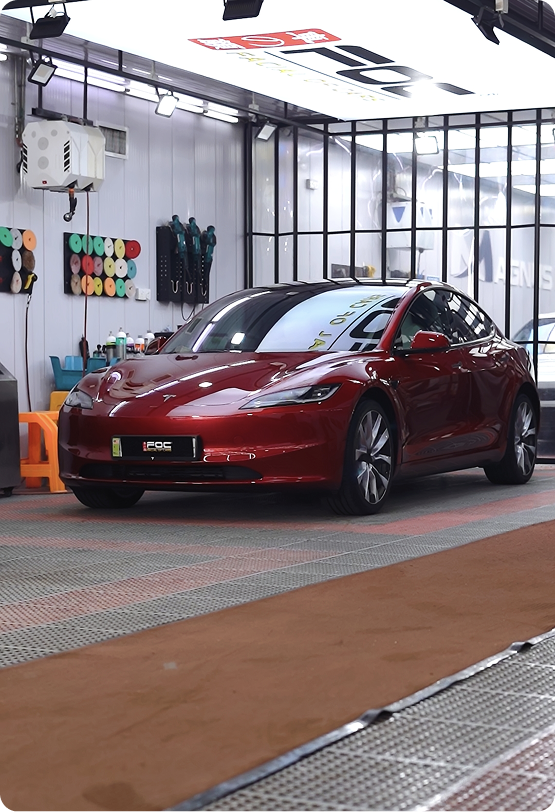
Tesla owners are often less worried about the existence of window film than about a poor installation. Frameless glass, large curved glazing and a minimalist vehicle design make inconsistent edges or visual defects easier to notice.
We pay particular attention to the relationship between the film edge and the operating glass. Tesla side windows index slightly when the doors open and close, so installation and aftercare should reflect that movement rather than following a generic framed-door process.
Large glass surfaces make contamination, uneven finishing, unnecessary seams and optical distractions more obvious. Before roof or large rear-glass work, we confirm the glass area and compatible installation approach rather than making a universal no-seam claim for every Tesla generation and film combination.
Tesla uses cameras mounted around the vehicle, including cameras positioned behind the windscreen near the rear-view mirror. We therefore treat the windscreen as a vehicle-specific installation area and do not assume that every part of the glass should simply be covered without considering the original equipment around it.
We do not claim that every film construction is automatically signal-neutral. If GPS, mobile connectivity or SmartTAG performance matters to you, we match a suitable film construction and check the manufacturer's stated compatibility before installation.
Freshly installed automotive film needs time to cure. The exact guidance can vary with the selected film and installation conditions, so we explain the applicable aftercare at handover instead of publishing one universal window-opening period for every Tesla.
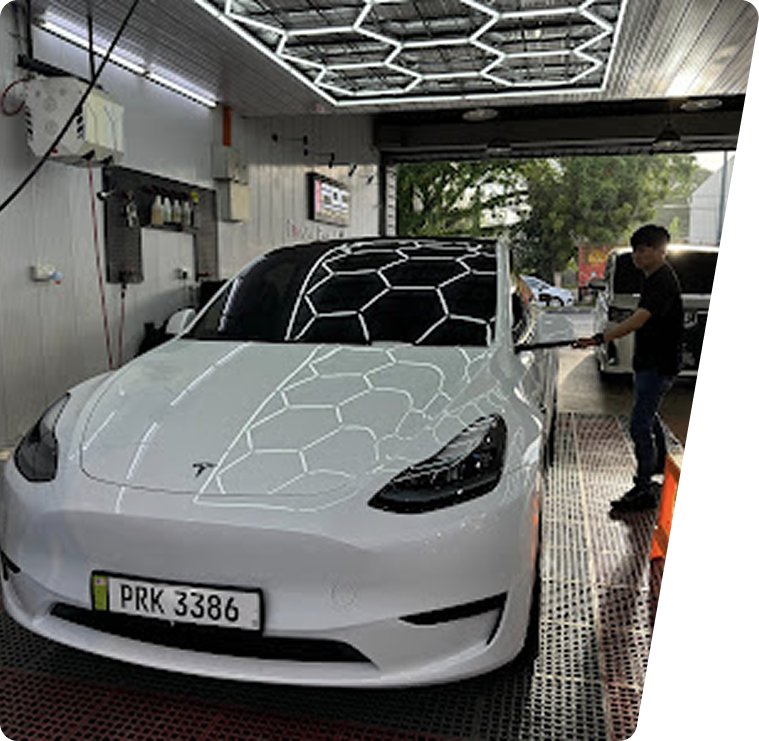
Start by deciding what each piece of glass actually needs to do.
WhatsApp us your Tesla model, model year, whether it has the panoramic glass roof, approximately how many hours it is parked outdoors and whether your biggest concern is the windscreen, roof, rear-seat comfort, night visibility or privacy.
We can then recommend a Model 3 or Model Y glass-by-glass tint direction and confirm the appropriate product and quotation scope before installation.
In summary, the right Tesla tint in Penang is not automatically the darkest full-car package. We first decide what the windscreen, frameless side glass, rear glazing and panoramic roof each need to achieve, then match the film specification to your actual driving and parking conditions.
For us, a good Tesla tint installation should improve comfort without creating a new problem with visibility, appearance, fitment or unnecessary treatment. That is why we prefer to understand your Model 3 or Model Y glass-by-glass before the first piece of film is cut.